
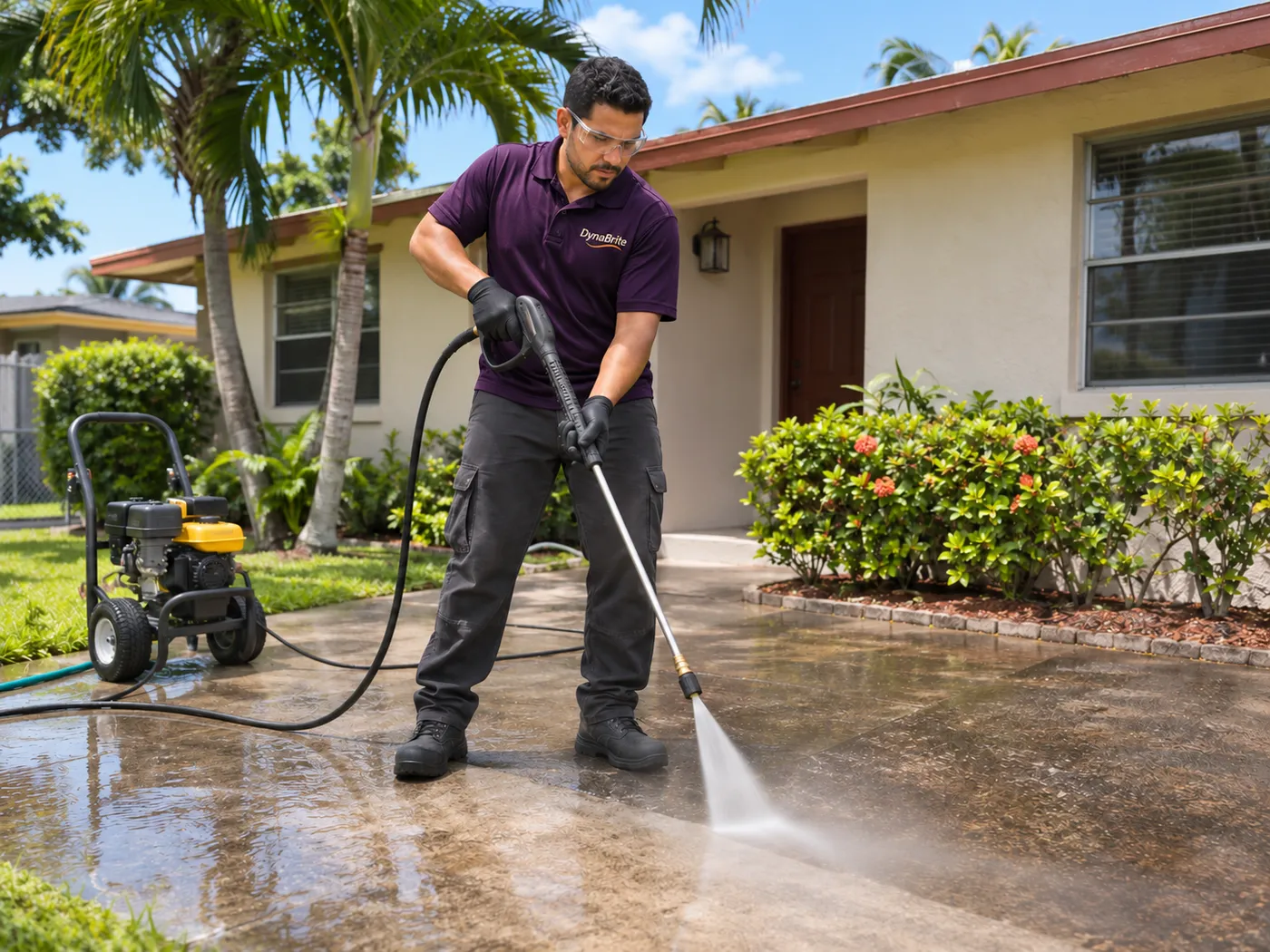
People often use "pressure washing" to mean any kind of exterior cleaning. But there are really two different methods, and using the wrong one on the wrong surface is how homes get damaged.
Pressure washing
Pressure washing uses high-pressure water to blast dirt and grime off hard surfaces. It's the right tool for concrete driveways, sidewalks and other durable, hard surfaces. For an even finish on large flat areas, pros use a rotary surface cleaner instead of a handheld wand, which prevents the striped look you sometimes see.
Soft washing
Soft washing uses low pressure, about what a garden hose puts out, combined with a cleaning solution that breaks down mold, mildew and algae. The solution does the work instead of the pressure. It's the right method for:
- Tile, shingle and metal roofs
- Stucco and painted block walls
- Painted trim, soffits and fascia
- Screen enclosures and delicate materials like coral stone
Why the difference matters
High pressure on the wrong surface can crack roof tiles, strip paint, gouge wood, pit coral stone and force water behind stucco or into windows. Soft washing avoids that, and because it kills organic growth at the root, the clean usually lasts longer.
Which one does your home need?
Most homes need both: soft washing for the roof and walls, and pressure washing for the driveway and walkways. A good company uses the right method for each surface on the same visit.